
Mastering Pool: Tips for Beginners and Pros
Playing pool is more than just a game; it's an art form that combines skill, strategy, and a bit of luck. Whether you are a beginner looking to learn the basics or a seasoned player aiming to refine your skills, this guide will provide you with essential tips and techniques to elevate your game.
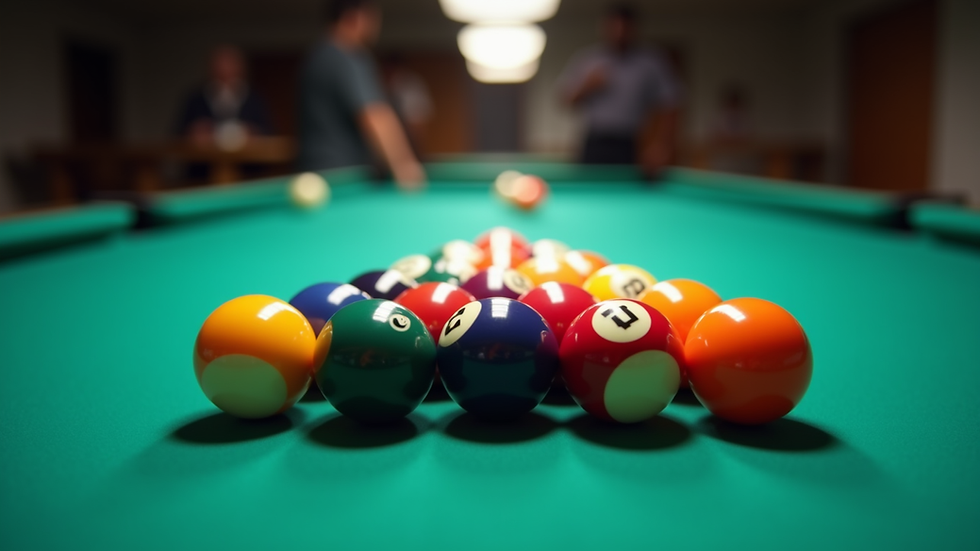
Understanding the Basics of Pool
Before diving into advanced techniques, it's crucial to understand the fundamental rules and equipment of pool.
Types of Pool Games
There are several variations of pool, but the most popular include:
Eight-Ball: The objective is to pocket all of your designated balls (stripes or solids) and then sink the eight ball.
Nine-Ball: Players must hit the balls in numerical order, with the goal of pocketing the nine ball.
Straight Pool: Players can pocket any ball, and the goal is to reach a predetermined number of points.
Essential Equipment
To play pool, you'll need:
Pool Table: The standard size is 9 feet, but smaller tables are available for home use.
Cue Stick: A long, tapered stick used to strike the balls.
Pool Balls: A set typically includes 15 object balls and one cue ball.
Chalk: Used to improve the friction between the cue tip and the cue ball.
Mastering Your Stance and Grip
A solid stance and grip are foundational to your success in pool.
Proper Stance
Feet Position: Stand with your feet shoulder-width apart. Your dominant foot should be slightly forward.
Knees: Keep your knees slightly bent for balance.
Body Alignment: Position your body parallel to the shot line, ensuring your shoulder is aligned with the cue.
Grip Technique
Hold the Cue: Use your dominant hand to grip the cue stick about 12 inches from the tip.
Relaxed Grip: Maintain a relaxed grip to allow for smooth strokes.
Bridge Hand: Create a stable bridge with your non-dominant hand to guide the cue.
Aiming and Shooting Techniques
Once you have your stance and grip down, it's time to focus on aiming and shooting.
Aiming
Visualize the Shot: Imagine a straight line from the cue ball to the target ball and then to the pocket.
Use the Ghost Ball Method: Picture an imaginary ball (the ghost ball) where the cue ball needs to be to make contact with the target ball at the correct angle.
Shooting
Follow Through: After striking the cue ball, continue your stroke to maintain accuracy.
Speed Control: Adjust the speed of your shot based on the distance to the target ball and the desired outcome.
Advanced Techniques for Pros
For those looking to take their game to the next level, mastering advanced techniques is essential.
Spin and English
Top Spin: Hit the cue ball above its center to make it roll forward after contact.
Back Spin: Strike below the center to make the cue ball spin backward.
Side Spin (English): Apply spin to the left or right side of the cue ball to alter its path after contact.
Position Play
Plan Ahead: Always think about your next shot while making your current shot.
Use Angles: Position the cue ball in a way that sets you up for an easier next shot.
Common Mistakes to Avoid
Even experienced players can fall into bad habits. Here are some common mistakes to watch out for:
Poor Stance: A weak stance can lead to inaccurate shots.
Overthinking: Too much analysis can lead to hesitation and mistakes.
Neglecting Practice: Regular practice is essential for improvement.
Practicing Effectively
To truly master pool, effective practice is key. Here are some strategies:
Drills
Straight Shots: Set up straight shots to work on your aim and stroke.
Bank Shots: Practice banking balls off the cushions to improve your shot-making skills.
Position Drills: Set up specific scenarios to practice your position play.
Playing with Others
Challenge Yourself: Play against opponents of varying skill levels to adapt your game.
Learn from Others: Observe and ask for tips from more experienced players.
Conclusion
Mastering pool takes time, patience, and practice. By focusing on the fundamentals, refining your techniques, and avoiding common mistakes, you can elevate your game from beginner to pro. Remember, the key to improvement is consistent practice and a willingness to learn. So grab your cue, chalk up, and hit the table!
Next Steps
Consider joining a local pool league or finding a practice partner to keep your skills sharp. The more you play, the better you will become. Happy shooting!

Comments